
Wildlife Qatar: Where to See Animals, Birds and Marine Life
Wildlife in Qatar is far more diverse than you might expect from a country dominated by desert landscapes. Beyond the dunes, you can find Arabian oryx and gazelles, migratory flamingos, mangrove ecosystems, sea turtles, dugongs, dolphins and hundreds of bird species.
If you're wondering where to see wildlife in Qatar, this guide covers the best places to look, what you might encounter and how to experience Qatar's natural environments responsibly.
Qatar's Wildlife at a Glance
Qatar's geography creates several distinct habitats, from desert and rocky plains to mangroves, wetlands, islands and shallow coastal waters.
According to Visit Qatar, the country has more than 300 recorded bird species, including a significant number of migratory species. Its wildlife also includes animals such as sand cats, desert hares, red foxes, sand gazelles and reptiles adapted to the country's arid environment.
Qatar also has an extensive network of protected areas. Visit Qatar states that protected areas cover more than 23% of the country's land area, while its nature-reserve guide highlights 12 nature reserves.
This makes wildlife watching less about visiting a single zoo and more about understanding where different species live.
1. Arabian Oryx: Qatar's National Animal
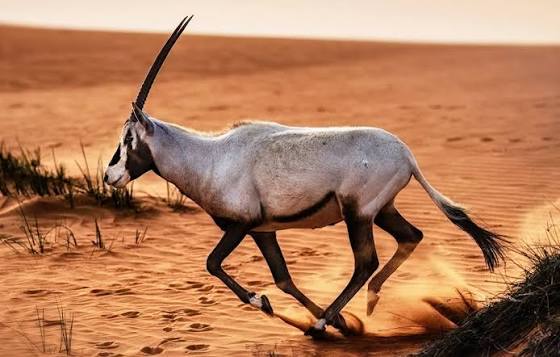
If there's one animal you should know before exploring wildlife in Qatar, it's the Arabian oryx.
With its white coat, dark facial markings and long, slightly curved horns, the oryx is instantly recognisable. It is also Qatar's national animal. Visit Qatar describes the Arabian oryx as a desert-adapted antelope native to the Arabian Peninsula.
The story of the species is particularly significant.
Arabian oryx populations declined dramatically across the region, leading to major conservation efforts. Qatar has subsequently been involved in breeding and reintroduction programmes, and the species can now be found in protected environments.
Where can you see Arabian oryx in Qatar?
The Al Sheehaniya Reserve is one of the country's important wildlife conservation areas. The Ministry of Environment and Climate Change says it was established in 1979 and covers approximately 12 square kilometres, with a particular focus on breeding the endangered Arabian oryx. The reserve also has an ostrich enclosure.
Visit Qatar also identifies the Al-Maha sanctuary as a place associated with Arabian oryx breeding and conservation.
2. Gazelles and Other Desert Wildlife
The Arabian oryx isn't the only mammal adapted to Qatar's harsh desert environment.
Visit Qatar lists several other desert species, including:
Seeing these animals in the wild requires considerably more patience than visiting a managed reserve. Many are nocturnal or naturally cautious around people.
That's why a guided wildlife or desert excursion can be useful. A local guide familiar with the terrain can identify tracks, habitats and signs of animal activity that you might otherwise drive straight past.
Qool tip: Don't expect a desert safari to become a wildlife safari automatically. If seeing animals is your priority, tell your tour provider in advance so the itinerary can be planned accordingly.
3. Flamingos in Qatar
Every winter, Qatar becomes a temporary stopover for migrating flamingos.
Visit Qatar reports that greater flamingos arrive during the winter migration season, generally from November to April, with the birds stopping at different locations along Qatar's coastline.
One of the best-known locations is the Al Thakhira Mangroves, near Al Khor.
The combination of shallow salty water, mudflats and mangrove vegetation provides feeding and resting habitat for flamingos and other birds. Visit Qatar also notes that the area attracts gulls, cormorants, waders, geese, mallards and teal.
The best way to see them
Rather than walking directly through sensitive habitat, consider a guided kayak or stand-up paddleboard excursion.
You can move quietly through the waterways while keeping your distance from the birds.
4. Explore Al Thakhira's Mangrove Wildlife
Al Thakhira Mangroves are one of Qatar's best wildlife-watching environments.
Visit Qatar describes Al Thakhira as one of the country's oldest and largest mangrove forests. The ecosystem attracts birds, fish and crustaceans and was designated a natural reserve in 2006.
The wildlife isn't limited to birds.
As you paddle through the waterways, look down into the shallow water and around the mangrove roots. You may notice:
Mangroves are also ecologically important. Their roots provide habitat for marine life and help protect coastlines from erosion.
Best experience: Go early in the morning when temperatures are lower and the waterways are quieter.
5. Purple Island and Coastal Birdlife
Close to Al Thakhira is Purple Island, also known as Bin Ghannam Island.
The island and surrounding wetlands are particularly interesting for visitors who enjoy birdwatching and coastal landscapes. Visit Qatar identifies the area as another resting point for migrating flamingos.
You can explore the area by:
The shallow coastal environment means that tides can significantly change the appearance of the landscape throughout the day.
If you're photographing birds, bring binoculars or a zoom lens rather than trying to approach them.
6. Marine Wildlife in Qatar
Some of Qatar's most interesting wildlife lives underwater.
According to Visit Qatar, Qatar's marine environment supports species including hawksbill turtles, leatherback turtles, dugongs, whale sharks and dolphins.
The country's northeastern coastline is particularly important for marine ecosystems. Visit Qatar also highlights coral reefs and identifies areas around Al Aaliya Island as habitats for aquatic life and endangered hawksbill turtles.
What might you see?
Depending on the location, season and activity, marine excursions can offer opportunities to encounter:
Of course, wildlife encounters are never guaranteed.
A snorkelling or boat trip should be treated as an opportunity to observe nature, not a promise that you'll see a particular animal.
7. Hawksbill Sea Turtles
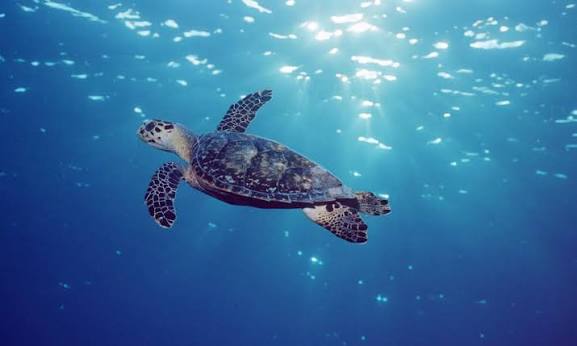
Qatar's coastline is important for hawksbill sea turtles, an endangered marine species.
Visit Qatar identifies the waters around Al Aaliya Island as a sanctuary and foraging habitat for aquatic life including hawksbill turtles.
Fuwairit is another location associated with turtle activity.
If you visit a turtle habitat, the golden rule is simple: watch without interfering.
Don't touch turtles, chase them in the water, block their route or use bright lights around nesting areas.
8. Dugongs: Qatar's Remarkable Marine Residents
Dugongs are among the most unusual animals you can associate with Qatar.
These large marine mammals are related to manatees and spend their lives in shallow coastal waters, feeding primarily on seagrass.
They are elusive, so seeing one is a special encounter rather than something you should expect on a standard sightseeing trip.
Visit Qatar lists dugongs among Qatar's rare marine species and includes them within its wildlife resources.
If you're interested in marine wildlife, ask your tour operator about conservation-focused boat excursions rather than simply booking a generic cruise.
9. Birdwatching in Qatar
Birdwatching is arguably one of the easiest ways to experience Qatar wildlife.
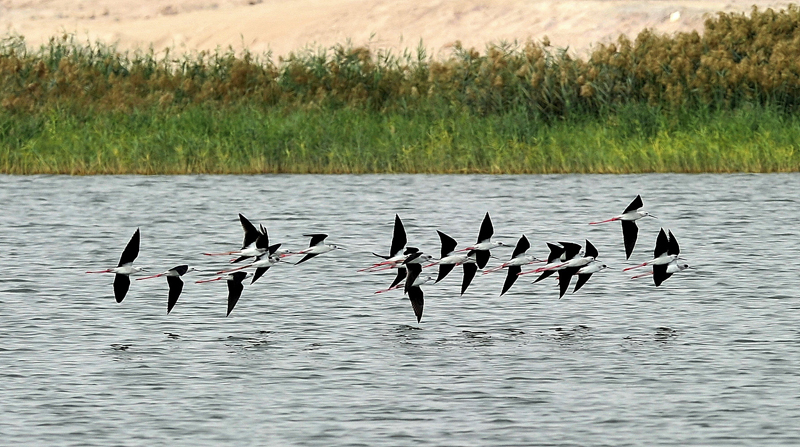
Visit Qatar records more than 350 bird species, including more than 200 migratory species.
Different habitats attract different birds.
Good places to look
Al Thakhira Mangroves
Best for coastal and migratory birds, including flamingos, herons, egrets and cormorants.
Khor Al Adaid
The Inland Sea's combination of desert and coastal habitats makes it a notable area for birdwatching. Visit Qatar specifically identifies flamingos among the wildlife that can be spotted there.
Irkaya Farm
Visit Qatar highlights this green reserve as a destination for birdwatchers and photographers.
What to bring
Visit Qatar recommends the Qatar e-Nature app, which provides information and images covering plants, birds, insects, mammals, reptiles and marine life found in Qatar.
10. Khor Al Adaid: Wildlife Where Desert Meets Sea
For a completely different landscape, head south to Khor Al Adaid, better known as the Inland Sea.
This protected area is famous for its enormous sand dunes meeting the sea. Visit Qatar identifies it as a nature reserve and highlights wildlife including flamingos, Arabian oryx and gazelles.
The journey itself usually involves crossing soft desert terrain by 4x4, making it easy to combine wildlife watching with a desert safari.
A well-planned excursion might include:
Qool tip: If wildlife is your main interest, avoid rushing from one activity to the next. Give yourself time to stop, scan the landscape and listen.
11. Wildlife in Qatar's Nature Reserves
Qatar's protected areas are central to its conservation efforts.
Visit Qatar currently highlights reserves including:
Not every reserve is designed for casual tourism.
The Ministry of Environment and Climate Change's Natural Reserves Department is responsible for issuing approvals and permits for entering and visiting terrestrial and marine reserves.
When Is the Best Time to See Wildlife in Qatar?
For most wildlife experiences, the cooler months are the easiest time to explore outdoors.
Visit Qatar recommends the winter months for exploring nature reserves on foot or camping, while spring and autumn migrations can be particularly interesting for birdwatchers.
A simple seasonal guide
November–April
Spring and autumn
Summer
How to Experience Wildlife Responsibly
Seeing wildlife is exciting. Getting too close isn't.
Qatar's Ministry of Environment and Climate Change oversees protected areas and wildlife conservation, with responsibilities including protecting ecosystems, managing reserves and supporting biodiversity conservation.
When you're outdoors:
The best wildlife photograph is one where the animal never knows you were there.
A Sample Qatar Wildlife Day
If you have one full day and want a mix of habitats, a northern itinerary works particularly well.
Morning — Al Thakhira
Start early with a guided kayak through the mangroves.
Look for herons, egrets and other coastal birds while exploring the waterways.
Late morning — Purple Island
Continue towards Purple Island for a walk and more birdwatching.
Afternoon — Al Khor
Take a break for lunch before heading back towards Doha.
Evening — Doha
Finish the day with dinner in the city, perhaps around Souq Waqif or The Pearl-Qatar.
If you have more time, dedicate a separate day to Khor Al Adaid rather than trying to combine the Inland Sea with northern Qatar.
FAQ: Wildlife Qatar
What animals can you see in Qatar?
Qatar is home to Arabian oryx, gazelles, sand cats, desert hares, foxes and various reptiles. Its coastal and marine environments also support turtles, dugongs, dolphins and other marine species.
Where can I see Arabian oryx in Qatar?
Al Sheehaniya Reserve is an important Arabian oryx conservation area. Visit Qatar also identifies the Al-Maha sanctuary as a location associated with oryx breeding and conservation.
Where can I see flamingos in Qatar?
Al Thakhira Mangroves and Purple Island are among the best-known locations for seeing migratory flamingos. Visit Qatar says the main flamingo migration period is generally November to April.
Can you see wildlife in Qatar's desert?
Yes. Arabian oryx and gazelles are among the species associated with Qatar's desert environments, while Khor Al Adaid offers a particularly interesting combination of desert and marine habitats.
What is the best time for wildlife watching in Qatar?
The cooler months are generally the most comfortable for outdoor wildlife experiences. For birdwatching, migration seasons in particular can provide opportunities to see additional species.
Experience Qatar Beyond the City with Qool Tourism
Qatar's wildlife isn't always obvious. Sometimes it's a flamingo standing quietly among the mangroves; sometimes it's an oryx moving across the desert or a glimpse of marine life beneath the Gulf's clear water.
With the right itinerary, you can experience several of these environments without spending your entire trip travelling between them.
Qool Tourism can arrange wildlife-focused excursions, mangrove kayaking, desert safaris, nature tours, transport and private itineraries across Qatar. If you're interested in seeing a particular species or exploring a particular habitat, let us build the day around it.